
The route to AI-native
Becoming AI-native, one working system at a time
Nearly every organisation we meet has AI somewhere in the building. Far fewer have it in production, owned, monitored and relied on by the business. That distance is the entire job, and this is how we close it.
The gap is not ambition
Almost nobody is short of AI ideas. What stalls is everything between the idea and a system the business can depend on: ownership, data, evaluation, the operational load of being wrong in front of a customer. Becoming AI-native is not a matter of adopting a tool. It is the point at which your organisation can put intelligence into a production system, and do it again next quarter without us.
- Pilots multiply, but nothing has reached a customer
- Every team has picked its own tools, and none of it compounds
- Nobody can say what “good” looks like for an AI change, so nothing ships
- Governance arrives after the build instead of shaping it
- The people who would have to run it were never in the room
Three stages, in order
They only work in this sequence. A strategy with nothing running behind it does not survive its first budget review, and a single impressive system that no other team can repeat is a demo with a longer lifespan.
1.See where you actually stand
A structured review across five things: your data foundation, your architecture, how you deliver, the skills in your teams, and how any of it would be governed. You end up with an honest picture of what is ready, what blocks you, and which workload to start with.
2.Get one workload live
We take that workload the whole way: real users, real data, an evaluation harness that gates every change, and a named owner for the day it gets something wrong. Nothing about an AI system is proven until it is carrying load.
3.Make it the way you work
The patterns, platforms and coaching that let the next team do it without us. AI-native is not a project you finish. It is the state of being able to do this again, deliberately, at will.
What stage two looks like when it is real
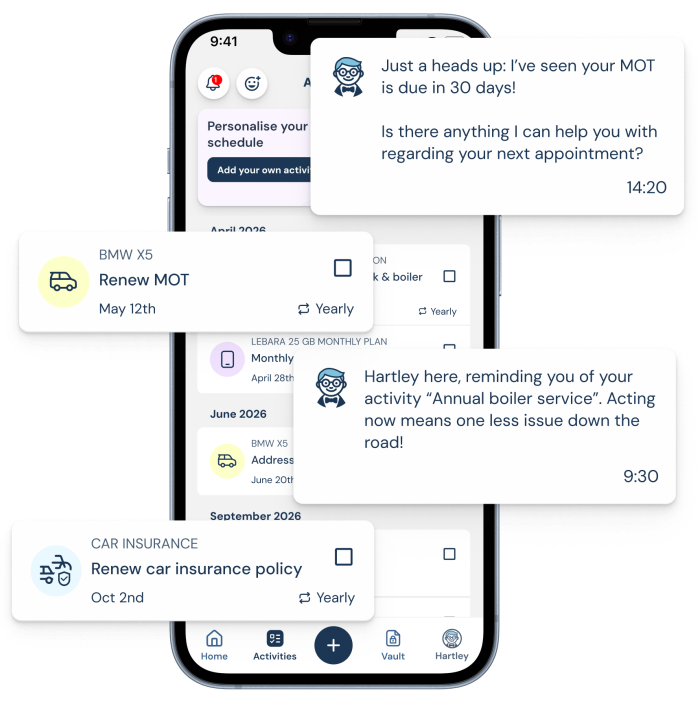
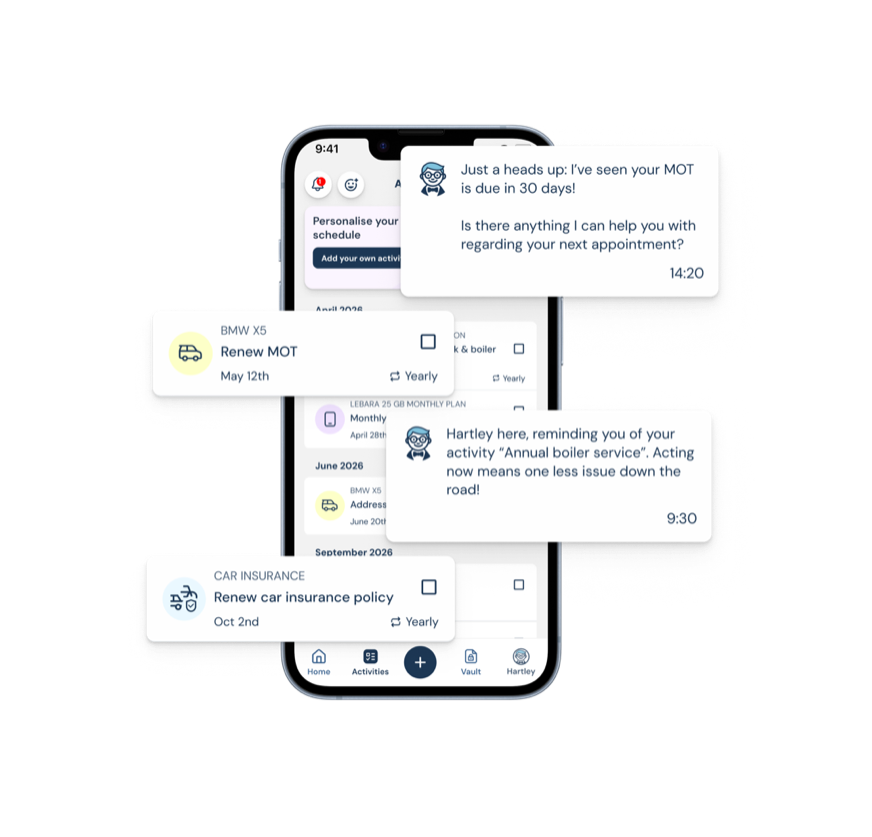
Hartley is a household management app that reads, files and tracks a home’s paperwork and reminds people before anything lapses. Merapar has been its build partner since the first line of code, and it went from proof of concept to a live app on the App Store and Google Play in under eight months.
What made it production, rather than a promising demo:
- Trust was settled before the build. Direct user research into how comfortable households are with an AI reading private documents shaped the roadmap before a single production feature was written.
- Two model families, each where it earns its place. Gemini on Vertex AI runs the consumer assistant as a multi-agent workflow; Claude on Amazon Bedrock runs autonomous production triage, classifying live incidents and raising deduplicated tickets without a human in the loop.
- Quality is a build gate, not a hope. An automated evaluation harness replays test scenarios against every change, and every feature branch deploys as a complete, disposable environment.
- Verified by someone else. Independent review at Tier 2 under Google’s App Defense Alliance CASA framework, assessed by DEKRA.
The lifecycle we would move you to
Stage three is not a slide about ways of working. Merapar’s own delivery already runs as an agentic lifecycle, and moving your teams onto the same footing is the thing we are actually selling. Not an assistant sitting beside a developer — agents inside the lifecycle, with people at every decision point. Agents execute; people decide.
Plan
People define and prioritise the work. An agent takes it from the board into technical refinement, design and approach, so the thinking about how starts as soon as the decision about what is made.
Develop
Agents implement on their own feature branches, several in parallel, each change building through CI/CD into a staging environment and looping — test, fix, redeploy — until it is stable. Nothing reaches main until a person has reviewed and approved the pull request.
Operate
A monitoring agent watches logs and metrics continuously and feeds what it finds back into the same loop. Releases to production are still triggered by a human.
See the lifecycle in full
Why take this route with us
Plenty of people will help you write an AI strategy. Rather fewer will still be there when the thing they designed is paging someone at three in the morning.
We stay for the run
Going live is where our commitment starts, not where it ends. We build, operate and keep systems working — a decade of mission-critical broadcast and streaming platforms is the reason clients trust us with the ones that cannot go down.
Model-plural by architecture
Two model providers run side by side in production in the same product today. The architecture is built so that swapping one is a design decision rather than a rebuild, because the landscape will keep moving.
Governed for Europe
A European company, certified to ISO 27001:2022, treating the EU AI Act as a design input rather than a retrofit. Governance, compliance and ethics are part of the build, not a review at the end.
You own what we build
We bring the expertise and build it with your people rather than around them. The system, the pipeline and the practice stay yours afterwards, including the parts our agents wrote.
In production, at our clients
Recommendation engines, content discovery and an AI-first consumer product, all built for real audiences rather than for a notebook.


Further reading and listening
 Whitepaper
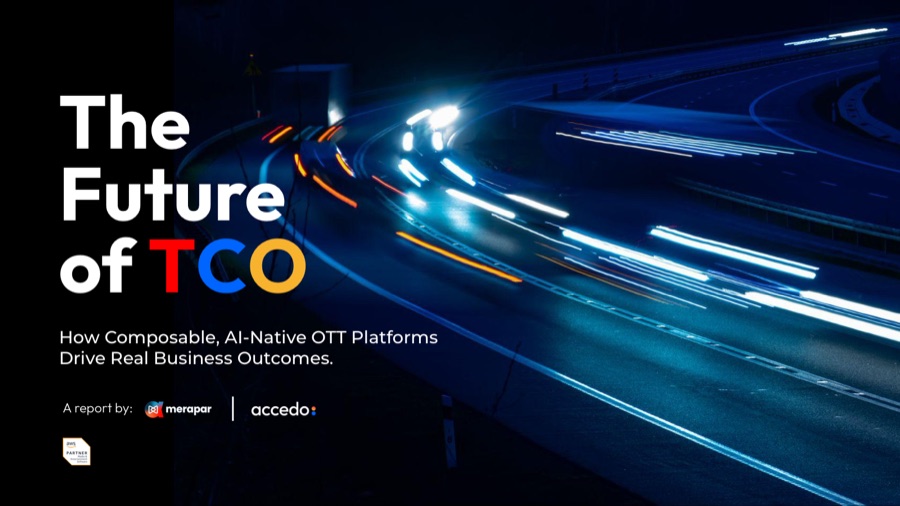
The Future of TCO 2025
How composable, AI-native OTT platforms drive real business outcomes. A 38-page report by Merapar and Accedo on redefining total cost of ownership when content costs rise, churn is hard to contain and user expectations move faster than platforms can adapt.
Read the whitepaper Blog
BlogNavigating the Data & AI Revolution
Harness the power of the Data & AI Revolution with Alfa1 Group and Merapar. Our integrated approach combines strategic consulting and technical expertise to help your enterprise navigate transformation, overcome challenges, and achieve tangible ROI. We build not just algorithms and data lakes, but business value.
Read the post Podcast
Episode 8: Legacy Modernization: The Snooze Button You Can’t Afford
Why media and entertainment companies (and others) can’t afford to sit still on their legacy systems.
About the episode
Start with the workload that is stuck
The most useful first conversation is not about strategy. Tell us about the one thing you have tried to get live and could not, and we will be straight with you about what it would take.