
Case
Efficient Transformation: DevOps-Driven Platform Migration
US-Based Global Leader in Streaming Services
Our client is a major international entertainment company with a large stable of global brands and streaming services. Since its launch, the company has quickly ascended to become a key player in the streaming industry, leveraging its extensive content library and multiple brands to attract tens of millions of subscribers worldwide. The size of the client, along with the multitude of brands and services involved, made this project incredibly challenging.

The challenge
Overcoming Inefficiencies due to Centralised Control and the immense Scale of the Ecosystem
The DevOps team at our client had been managing an ECS-based hosting platform for nearly six years. This ECS-based platform in the AWS Cloud supported over a hundred teams globally, spanning various organisations and brands. The platform facilitated the deployment of applications across multiple platforms, including smart TVs, IP dongles, web interfaces and set-top boxes.
- Lack of Ownership: Development teams were primarily focused on application coding, with little involvement in operational services. This lack of responsibility for infrastructure led to delayed responses to operational issues and inefficiencies in the development process.
- Operational Bottlenecks: The centralised management of the platform by the DevOps team caused delays and reduced agility, hindering the ability to respond swiftly to infrastructure and operational challenges.
- The scale of the project was immense: It involved numerous different brands and over a hundred teams globally, each doing their own thing. This lack of alignment, both in terms of collaboration and IT infrastructure, resulted in significant inefficiencies and challenges.
- Stakeholder Complexity: Transitioning to a new platform required identifying and engaging original stakeholders, many of whom were no longer available, adding complexity to the migration process.
The solution
Restore Ownership and Empower Developers with a new Kubernetes-based platform
To address these challenges, our customer decided to transition to a Kubernetes-based platform managed by a dedicated platform engineering team. This strategic shift aimed to decentralise control and empower development teams with full responsibility for their build, delivery, deployment, monitoring and uptime processes. The DevOps team from Merapar led the DevOps programme, working closely with all development teams to ensure a smooth transition. So what did we do exactly?
- Platform Transition: Developed and transitioned to the Kubernetes self-service platform, enabling development teams to own and manage their operational processes.
- Reusable Frameworks: Implemented reusable processes, frameworks, blueprints, and best practices to streamline the migration and accelerate the transition.
- Integration of Development Teams: Integrated development team members into the migration process to foster ownership and accountability for their operational processes.
- Created new monitoring dashboards and alert flows: This improved ownership in the teams involved.
Technologies involved in the solution
AWS Cloud
Kubernetes

Jenkins
Nexus

Implementing a strong DevOps approach was incredibly rewarding as it allowed me to support and guide the teams. This empowerment significantly boosted their deployment frequency and innovation, leading to remarkable improvements in their overall efficiency and agility.
The results
Achieving Operational Excellence, Agility and Significant Cost Savings
The transition to the new Kubernetes-based platform brought substantial recurring cost savings, through more efficient operations and development agility for our client.
- The cost savings were huge: The work we did led to effective rationalisation, resulting in considerable recurring cost savings.
- Enhanced Deployment Frequency: Development teams gained direct control over their pipelines, leading to more frequent deployments and reduced lead times for changes.
- Improved Innovation Rates: Empowered with full responsibility for their operational processes, development teams could innovate faster and more effectively.
- Operational Excellence: The migration resulted in a notable reduction in the mean time to recovery from incidents and a decrease in change failure rates, boosting overall service reliability.
- Agility and Responsiveness: This shift fostered a more agile and responsive development environment, positioning the client for greater success in their digital operations.
This transition, which Merapar facilitated, significantly enhanced the stability and reliability of services. By fostering a culture of ownership and accountability, we enabled the client to achieve significant improvements in operational excellence, innovation rates and overall product and service quality.
Related
 Case
CaseFrom Fragmented Infrastructure to a Robust Kubernetes Solution
Merapar turned a European network provider’s fragmented container setups into one high-availability Kubernetes cluster on its existing on-premises hardware.
Read the case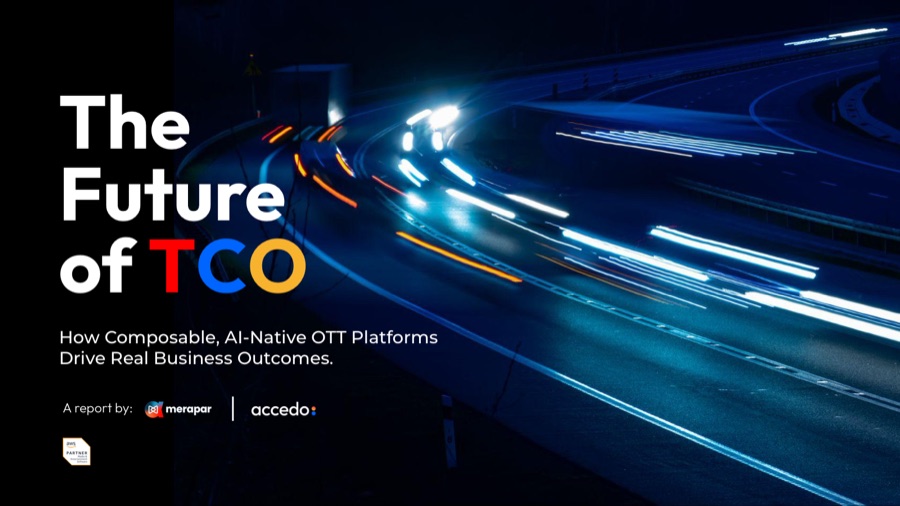 Whitepaper
The Future of TCO 2025
How composable, AI-native OTT platforms drive real business outcomes. A 38-page report by Merapar and Accedo on redefining total cost of ownership when content costs rise, churn is hard to contain and user expectations move faster than platforms can adapt.
Read the whitepaper Blog
BlogSecuring AWS IAM access in Kubernetes
How to give each Kubernetes pod on AWS its own least-privilege IAM role with kube2iam, and lock down the EC2 metadata API, rather than storing AWS credentials.
Read the post
Could we do the same for you?
Tell us what you are trying to build, and we will tell you how we would approach it.