

Case
From Fragmented Infrastructure to a Robust Kubernetes Solution
Background on the case
One of Europe’s leading mobile and fixed network providers faced significant challenges with its existing infrastructure. Various teams had independently set up containerised applications using different methods—from Docker Compose on single machines to inconsistently configured Kubernetes clusters. This fragmented approach led to inefficiencies, limited high availability, and increased complexity in management. The solution involved fully optimising their on-premises infrastructure, ensuring it was both efficient and future-proof. This case underscores the value of a strategic, balanced approach: maximising existing resources while integrating cloud solutions only when it genuinely enhances value.

The challenge
Navigating Fragmented Infrastructure
The main challenge for the provider was creating a robust, unified managed cluster environment that could resolve the inefficiencies of their previous approach. The disparate setups hindered standardisation, making operational resilience and consistency difficult to maintain. These fragmented environments were not only resource-intensive but also posed significant risks to service reliability, especially for legacy applications requiring constant uptime.
The solution
Leveraging Underutilised Resources to Build a Kubernetes Environment
Merapar proposed leveraging the underutilised resources of existing ESX clusters to create an on-premises Kubernetes environment focused solely on virtual machines. By reusing these resources, Merapar was able to implement a high-availability cluster with balanced workloads. This approach maximised the value of the company’s existing investments by utilising infrastructure that was purchased some time ago. With container portability, they can seamlessly run workloads on-premises, which is particularly advantageous for legacy 24/7 applications that are not yet optimised for the cloud. While the cloud remains a viable option for other workloads, the on-premises Kubernetes cluster optimises resource utilisation and enhances operational resilience, making it a strategic win for the company.
Technologies involved in the solution
Kubernetes
Cisco ACI

F5 BIG-IP
NetApp ONTAP

Transforming fragmented systems into a unified, resilient infrastructure was no small feat, but seeing the immediate impact on scalability and reliability made every challenge worth it.
The results
Achieving Scalability, Resilience and Flexibility
By rethinking its infrastructure strategy and optimising existing resources, the provider has achieved several key benefits:
- Scalability: The Kubernetes environment is now scalable, enabling easy adaptation to changing demands.
- Resilience: The high-availability setup ensures balanced workloads, enhancing infrastructure resilience.
- Flexibility: They can now flexibly run workloads on-premises, optimising resource utilisation based on application requirements.
- Cost Efficiency: Leveraging existing infrastructure investments has minimised additional capital expenditure while providing a modern container management system.
Our collaboration with this European telecommunications provider demonstrates how rethinking infrastructure strategies and optimising resources can lead to a scalable, resilient and flexible solution that meets the complex demands of modern telecommunications. At Merapar, we are strong believers in a pragmatic hybrid approach to maximise existing investments while allowing customers to strategically deploy cloud resources where they add the most value. So it is not about migrating everything to the cloud, it is about getting the best of both worlds.
Related
 Case
CaseEfficient Transformation: DevOps-Driven Platform Migration
Merapar led a streaming leader’s move from a central ECS platform to self-service Kubernetes, giving 100+ teams ownership and recurring cost savings.
Read the case Whitepaper
Customer Data Platforms for direct to consumer media organisations
Customer Data Platforms reshaped e-commerce. What they offer media companies, and what to weigh before adopting one.
Read the whitepaper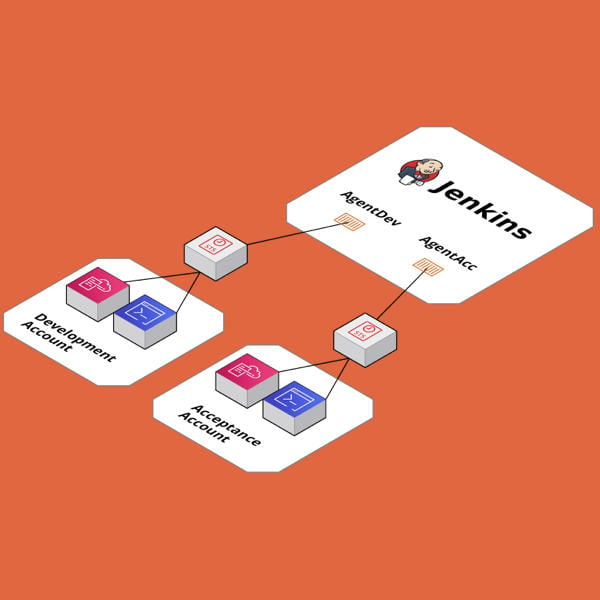 Blog
BlogMerapar DevOps — Use AWS ECS for multi account deployments with Jenkins
To practice continuous integration and continuous deployment, we use multiple environments to manage our development, testing, acceptance and production (DTAP like) workload.
Read the post
Could we do the same for you?
Tell us what you are trying to build, and we will tell you how we would approach it.